• Skip to main content
  • Skip to primary sidebar

Active Recall!

Podcasts, videos, and iPad art

  • About
  • All Posts
  • Podcast
  • Videos
  • Book Notes

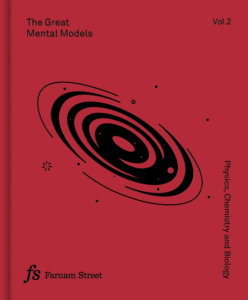
Just picked up The Great Mental Models 2

March 28, 2020

Check out the full notes for “The Great Mental Models, Volume 2: Physics, Chemistry and Biology” by Rhiannon Beaubien and Shane Parrish

I just picked up the Volume 2 of The Knowledge Project’s “The Great Mental Models”. The hardcover is on the way but I just saw that the Kindle version is available so I got it to check it out now. When I was a kid, my parents bought a World Book Encyclopedia set (decades later I learned that door-to-door encyclopedia sales are adjacent to door-to-door knives sales).

I used to think these books were some sort of source of truth for the world.

That core set of books also came with other book sets. All my friends also had encyclopedia sets but they either had more extra sets or just the core sets. Likely based on how convincing the upsell pitch was to their parents.

One of the extra sets was a science one that I would open once in a while but it always seemed too advanced. Then there was another science set with red spines that had the same topics but the books had more illustrations and were more fun to read.

That’s how “The Great Mental Models” feels: easy to read while learning new concepts.

(A level below that was another set called Childcraft which had a “Mathemagic” book with a logic puzzle at the start which probably had some influence on eventually one day learning to program.)

A different mental model book I return to often is “Superthinking” by Gabriel Weinberg and Lauren McCann. I enjoy both. Superthinking is more skimmable, with each model getting 1-2 pages. (“The Great Mental Models” dedicates a full chapter to each mental model so it’s a deeper dive into each with multiple stories.) Superthinking also helped me understand that there isn’t a formal, authoritative list of mental models. They’re the concepts pulled out of disciplines that are most applicable across disciplines.

Creativity often stems from applying a concept from discipline to another.

  • Book Notes
Gabriel WeinbergLauren McCannShane ParrishSuperthinkingThe Great Mental Modles

March 28, 2020 Podcast Notes

Writing this on the treadmill after a kettlebell workout – a small modification of the routine that Joey Yang put together in his article here.

Listened to Jimmy Kimmel on the Bill Simmons Podcast. I linked to the video because it capture the current situation: celebrities making a bunch of content from home. Just like everyone else sharing things from home.

Figuring out new routines — They talk about their new routines now that they’re working from home. Interesting perspective from people with large teams of creatives. Also cool because they’ve each been working in media, changing roles, and adjusting as the internet changed everything. Kimmel mentions a couple times that it feels like going back to his roots working in radio where a lot of it was done alone.

Buying some gift cards — Food has always been a part of The Ringer in some way. David Chang’s Podcast is in their podcast network. (And don’t forget House of Carbs!) Kimmel‘s hobby is cooking. (I need to remember where it was, maybe when he was on Conan Needs a Friend, but he talks about cooking large meals for groups of friends and Conan suggests that it’s probably part of the reason Kimmel is known as very happy amongst comedians.)

Ending TV as we know it? — As more and more people stay inside for extended periods, they’re seeing how entertaining low production stuff can be. Simmons points out that social video and phones have lowered the expected production standards people have. Some of the entertainment is the “just like us!” novelty of these celebrities at home.   It’ll be nice to see shows return to higher production. Simmons points out that he watched a talking head news show with people dialed in with video chat and… it’s pretty much fine. The at-home nature of it doesn’t overshadow the discussion. (While the whole angle of other content is being at home.)

Just like us! — They do a parent corner segment and discuss their family lives changing with all the time spent together at home.

Mental model: Second order effects — As COVID became more and more serious, I did start think about what life would be like working from home and then maybe needing to stay home entirely. It never crossed my mind that…

  • … sports (and pretty much all live events) would be affected. I had tickets to UFC 249 and didn’t think about the possibility of not going until the NBA postponed all games.
  • … I would play so much Mario Kart. Maybe that more people would play videogames. But Mario Kart has been the default for separate groups of friends. I think because it’s fun when mixing drastically different skill levels. (Smash, not as much.)
  • … everyone would just start working out from home. I didn’t expect to see so many people doing push-ups on social media. I went to order a heavier kettlebell a couple nights ago. Weights in the standard progression (16kg, 24kg, 32kg) were out of stock on most of the sites I checked. Not sure entirely if it’s because of this but kettlebells are great for at-home workouts. Hey that reminds me of an episode of The Pat Flynn Show where he talks about building a minimal home gym for ~$100.

I’ll start a new post for that.

  • Podcast Notes
  • Weblog
Bill Simmons PodcastJimmy KimmelMental Model: Second Order EffectsQuarantine

March 22, 2020 Podcast Notes

Here’s a Michael Lewis and Malcolm Gladwell conversation from 2016. (When Michael Lewis was on tour for The Undoing Project.)

I will now just pull from my own post (notes about Chip and Dan Heath’s “Made to Stick”) for something this reminded me of.

All this talk of metaphor and models reminded me of this episode of egghead.io’s podcast with their illustrator, Maggie Appleton: “Turning Technical Concepts into Approachable Illustrated Metaphors with Maggie Appleton”

I think the mistake would be to believe that understanding the metaphor means you fully understand the concept.

  • Podcast Notes
Mental ModelsMichael LewisThe Undoing Project

Reading log: “That Will Never Work: The Birth of Netflix and the Amazing Life of an Idea”

March 10, 2020

I turned my iPad Pro 12.9”—the first gen one from 2016—for this first time in maybe a year and thought I’d give the keyboard a bit of a run. Man I always loved the rubber cover that Apple discontinued after the first gen. Anyway, I thought I’d do a quick reading log update.

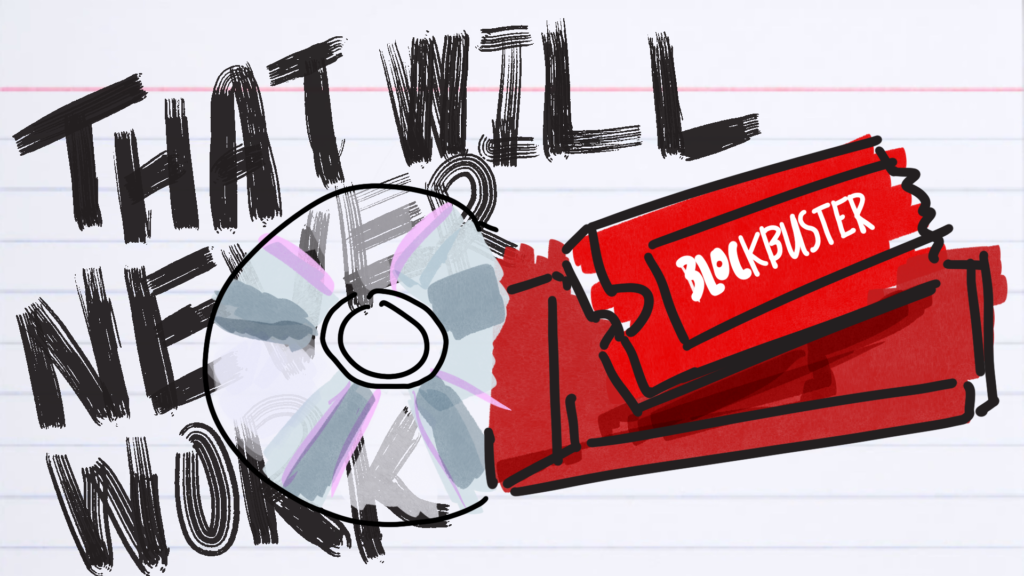
I started listening to Marc Randolph’s “That Will Never Work: The Birth of Netflix and the Amazing Life of an Idea” and am about 25% in. Here are some things I’ve enjoyed so far.

    • It wasn’t all a grand master plan from the start

It was the late 90s and there was no clear indication yet that DVDs would become the clear winner for home videos after VHS tapes. In 8th grade, a 2nd Blockbuster was going to open in our town and the rumor was that it would be all DVDs. It sounded so far fetched at the time.

Part of the reason I enjoy these tech business memoirs is that I have fond memories of the sort-of-early internet. I’m guessing this is similar to how people a decade older than me feel about books about early desktop PCs.

    • The book does a great job setting the stage and painting the picture of what starting a tech company was like back then

I’m currently also (slowly) reading “Rebel Without a Crew”, Robert Rodriguez’s memoir about making El Mariachi as a young filmmaker. It’s in a diary format, and I’m guessing pretty lightly edited from his actual diary. He talks about all the mundane, tedious steps of shooting and editing video on old machines without digital footage or video editing software. There’s so much planning and experimenting and budgeting because of constraints like physical film remaining.

“That Will Never Work” similarly spells out the huge effort and cost required to write and host online software at the time. Then there’s the manual steps of matching orders to physical DVDs and then putting those in physical mailers and shipping them out at the post office.

I’m currently typing this post in the WordPress editor. It’s actually easier at this point to make a video with special effects and text overlays and editing and share it with the world than it is to get a mostly text blog up on a domain.

Everything is amazing right now.

I do like things in 3s, so here’s another quick thing I’ve learned from the “That Will Never Work”:

    • Recommendations were a focus from the start

There’s a story about a home video conference and a person (who I’m guessing will turn out to be someone pretty high up at Netflix) who made video rental inventory software. He was also a huge movie buff and could recommend the right movie to anybody. Another story is about Netflix looking for an existing movie database that they could pay to use. Netflix had organizing and filtering and choosing DVDs based on your interests in mind pretty early on.

That’s that for now. I’ll continue writing these short writing logs about different books I read.

  • Book Notes
Marc RandolphNetflixRebel Without a CrewThat Will Never Work

Conan O’Brien: Note to self, tomorrow you’ll eat nothing (Podcast note)

March 1, 2020

  • Podcast
    Conan O’Brien Needs A Friend
  • Episode Title
    Judd Apatow
  • Episode links
    Apple Podcasts • Google Podcasts • Episode Website

Celebrities… they’re just like us! Always comforting to be reminded that you’re not alone in the world.

At least once a year, I’ll start thinking about journaling regularly again, then I’ll check out some old journals. Year after year—same goals often reflecting the same problems.

Conan talks about this endless cycle:

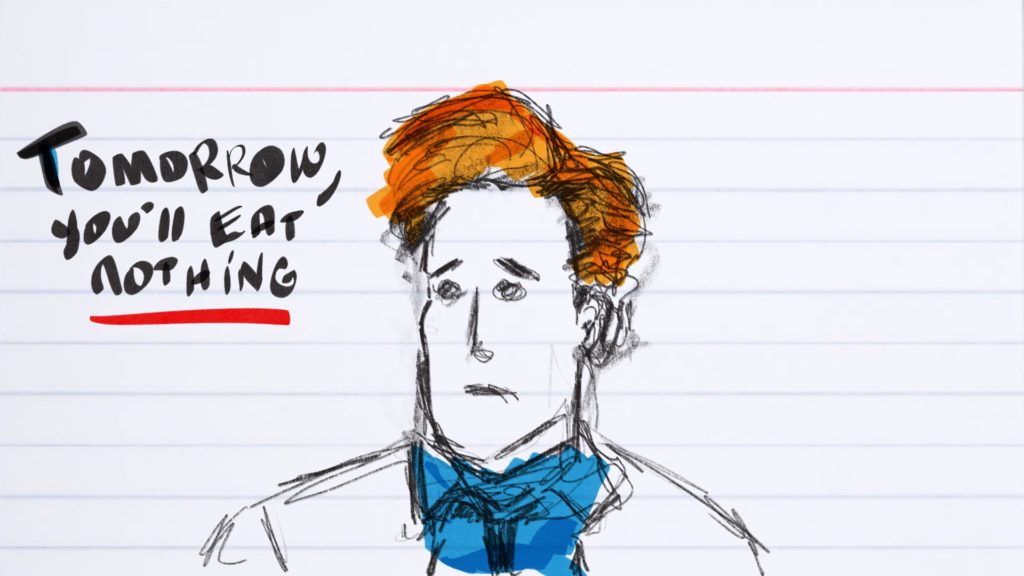
That’s your true self. Just a piece of shit. I… it’s so funny you bring that up because I have all these journals that I’ve found and they’re all so annoyingly self helpy. It’s all like: tomorrow you’ll eat nothing. And you’ll run on a machine for six hours and you know, you’ll get… and it’s just… what?!

And it and it’s like that’s 1995. Wait 1998. Here’s an entry from 2014. Here’s one from 2019.

Judd Apatow has interviewed comedians all his life. He collected them in Sick in the Head. Some of the interviews are from when he was in high school and he re-interviews them decades later.

(Also check out this post, where I mention a Seinfeld technique from Sick in the Head. I promise it doesn’t have anything to do with marking an X on the calendar.)

Actually, while we’re talking about Sick in the Head and journaling, here’s something he says about reading books and actually doing the things in them:

Judd: I had ignored it because I hated it when a book asked you to do a lot of things—journaling, answering questions, et cetera—but I did it in that book, and it changed my life. That book is trying to inspire people to have the courage to be creative. There was a section that asked, “What would you want to be true or for you to believe about yourself that you are afraid to admit?” And I said, “That I want to be a genius like James Brooks.”

What does it really mean to finish1 a book?

There are certainly levels.

  • Listening at 3x vs. skimming a physical copy for 10 minutes—You’re better off skimming
  • Reading slowly, disconnected over months vs. listening at 2x all at once—I’d bet on listening at 2x all at once being better

It also depends on the book and why you’re reading it in the first place. There are things that will help you really understand the concepts better.

  • Summarizing and sharing thoughts from the book makes it feel more finished.
  • Actually applying practicing steps given in a book makes it feel even more finished.

By the way, ”That book” that Apatow is talking about is, you may have guessed it, Julia Cameron’s The Artist’s Way. (Which I need to really someday sooner rather than later.)

  • Podcast Notes
Conan O'BrienJournalingJudd ApatowSick in the Head

iPad Journal: thoughts for the next video

February 27, 2020

I made a couple iPad Journal videos (here’s January and February) and want to continue making some of these to share how I use the iPad. Usually, I’ll outline things in various notes and mind maps, feel satisfied, and then never doing anything with them after. In my ongoing effort to focus on finishing (read more about that here), I thought I’d jot these ideas down as a post.

Actually, let me just remove the italics because this whole post is going to just be me blogging about blogging. I finished reading Hatching Twitter this week. One of the things that stood out early in reading the book is some of Twitter’s founders1 already had major impact in online publishing through Blogger. Another worked for Xanga.

Thinking about these services reminded me of how casual blogging was back then. At some point I remember having either a b2 or greymatter installation and eventually had a WordPress blog in high school. I would just share links and fire off thoughts. No schedule, sometimes multiple short posts a day.

Of course, Twitter and other social networks fill that need now.

Anyway, there does seem to be a growing chorus who miss the lower-dopamine days of personal blogs.

With all that, here are some rambling iPad thoughts.

Or: Writing out different sections of a future iPad Journal video

The iOS shortcut that I just had no idea about — There was a recent post on Daring Fireball where Gruber mentions that he didn’t know that you could look at files in a list view or column view (with sorting options). It was shown on stage but so are a ton of other things at the same time.

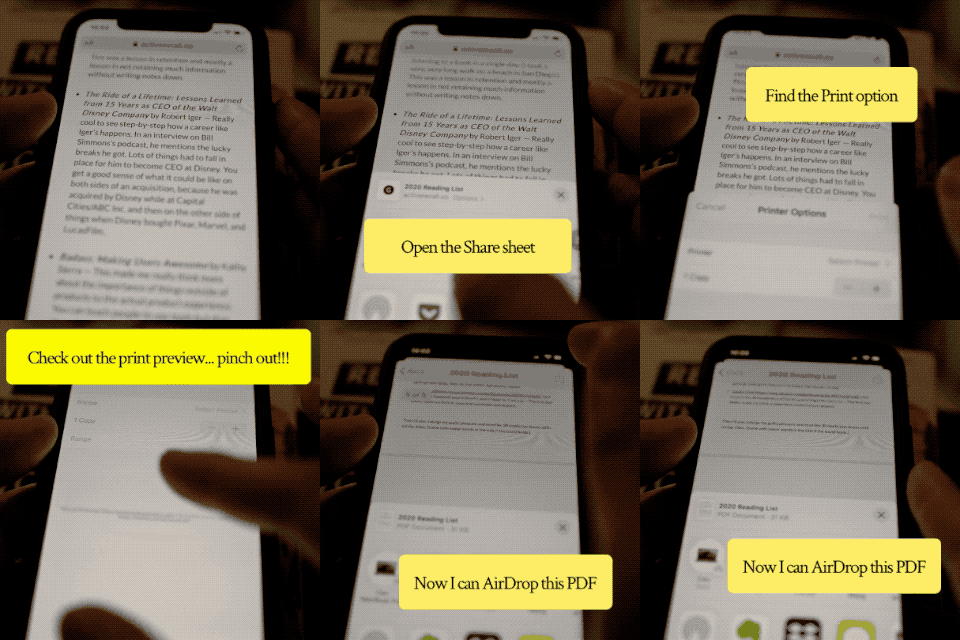
Here’s one I didn’t know until a couple weeks ago: if you want a quick PDF (which you probably want pretty often on an iPad with great tools like GoodNotes and Notability) — open the share sheet in Safari (or other app), hit print, then you get that preview.

Actually I’ll just make a quick GIF of this right now.

Site to pdf small

You can then pinch out and get a PDF quick look that you can save or share to whatever app you want.

I use this for reading material later when I just want basically a hard copy of what I was looking at on my phone to read on my iPad. I could share the link, of course, but I don’t know, it’s nice to read with a Pencil to scribble things down.

My setup for getting in flow in Procreate — Basically how I have my radial menu setup so that I can go without the menu for long stretches. I have these actions set up on it:

  • Brush that’s like a brush
  • Brush that’s like a pen
  • Brush that’s like a marker
  • New layer
  • Previous color

My writing setup — I can show things like:

  • My Topcis notebook in Evernote
  • The setup I have for blogging for 25 minutes
  • That can transition into the other things I’ve made in Shortcuts to make writing a daily practice

(Okay making that GIF took way longer than I planned. I’ll just post this now.)

  • iPad
Hatching TwitteriPad Pro
  • « Go to Previous Page
  • Page 1
  • Interim pages omitted …
  • Page 62
  • Page 63
  • Page 64
  • Page 65
  • Page 66
  • Interim pages omitted …
  • Page 106
  • Go to Next Page »

Primary Sidebar

Subscribe to the channel

Focusing on making videos in 2023.

✍️ Recent Posts

Keep the page turned

An idea for what I might try to make next: How do people transform?

Carve out time away from (crappy) flow

Switching it up: CrossFit and the welders of Rogue Fitness

Musashi: the age we live in (or something)

🎧 Recent Episodes

Takeaways: “Someday is Today” by Matthew Dicks | #126

125: Creativity x Fitness – Consistency, Classics, and Crane Kicks (3 links)

118: The Psychology of Fitness: 1, 2, 3

Popular Posts

  • Book Notes – “Awareness: The Perils and Opportunities of Reality” by Anthony de Mello
  • Lightning Round Questions
  • Kobe Bryant: Every day math
  • Journal: The first 8 weeks of Active Recall
  • How to succeed as a writer (What I’ve learned by reading Bill Simmons)

By Francis Cortez

  • About
  • YouTube Channel
  • Instagram (@activerecall)
  • Twitter (@activerecall)

Categories

  • iPad Pro
  • Podcast
  • Book Notes
  • Podcast Notes
  • Weblog
  • Videos
  • Fitness
  • Creative Pages
  • iPad
Back to homepage • By Francis Cortez (@activerecall)