• Skip to main content
  • Skip to primary sidebar

Active Recall!

Podcasts, videos, and iPad art

  • About
  • All Posts
  • Podcast
  • Videos
  • Book Notes

Todo: Write a post about quake episodes

June 20, 2021

There are quake books: books that change your view of the world.

Ryan Holiday mentions it in a blog post:

My reading was much different when I was younger. I would more likely intensively engage with some important book totally full of new ideas. Hayek. Parfit. Plato. And so on. There just aren’t books like that left for me anymore. So I read many more, to learn bits, but haven’t in years experienced a “view quake.” That is sad, to me at least, but I don’t know how to avoid how that has turned out. So enjoy your best reading years while you can!

I don’t read nearly as much as Ryan Holiday, so there are plenty of quake books left for me to uncover.

A couple that come to mind: Getting Things Done for helping me understand the importance of next actions before starting my career, How to Win Friends and Influence People for teaching me not to try to change minds of friends who argue for sport, Moneyball so that I could understand why people always mention Moneyball.

Here’s what Tyler Cowen has to say about quake reading:

Maybe Rene Girard was the last “view quake” author I read.  On the upside, greater context means that many more books are interesting than was the case before.

Which, of course reminds me of Luke Burgis’s Wanting, which is an approachable overview of Girard’s mimetic theory. (Check my notes out here.)

And the best quake book that also happens to involve Quake: Masters of Doom.

ANYWAY, the reason I mention all that is that I want to write a post about quake podcast episodes. There are probably a few podcast episodes that changed my perspective or actually got me to take action on something.

One that comes to mind: one of the Naval interviews, either on Joe Rogan or Tim Ferriss’s or The Knowledge Project, but it’s where he talks about just jumping between books, doing lots of skimming. I started doing this and it was both good and bad for me. Mostly that I started buying a ton of books and reading more broadly but at the same time somewhat sabotaging my ability to actually focus on any single book while reading.

Okay yah so this is the pre-post where I share that idea and I’ll follow up (someday) with an actual list of 5-7 podcast episodes. (Another that comes to mind: Bill Simmons’s ESPN.com 20th anniversary episode where he just talks through his career progression that grew as the the internet grew.)

  • Read, Watch, Listen
Masters of DoomQuake BooksRyan HolidayTyler Cowen

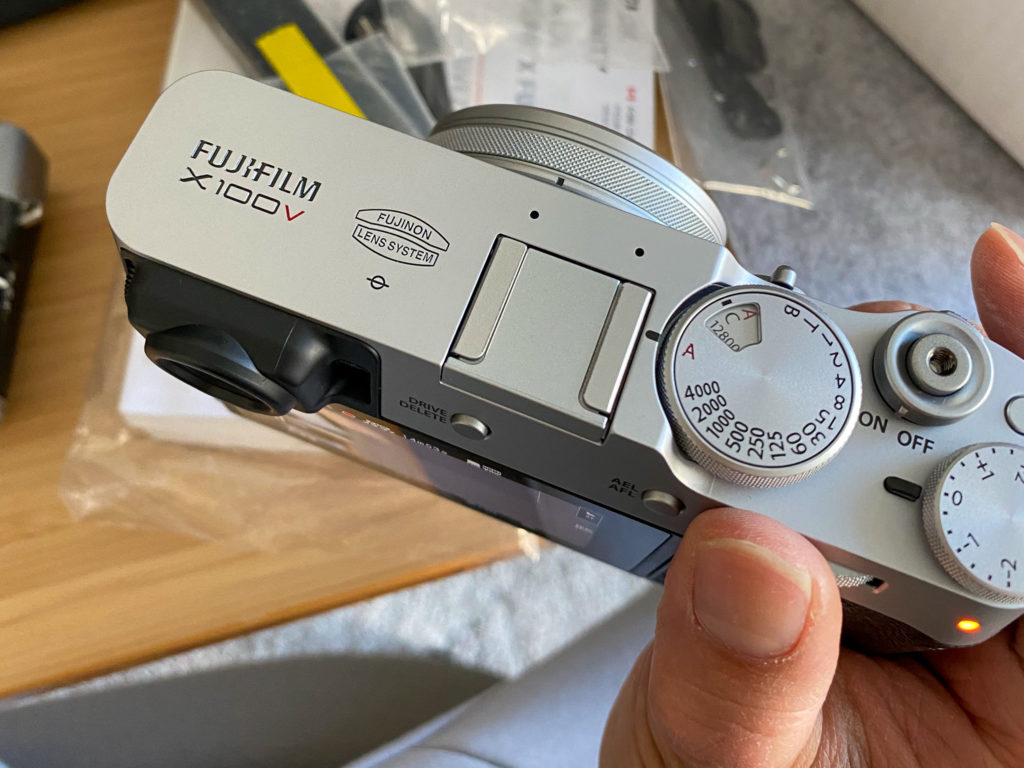
One week with the Fuji X100V

June 20, 2021

Just going to write some notes here and share some photos. Summary: I love it so far.

  • I’m loving the touchscreen’s tap-to-shoot shortcut: At first this seemed like a gimmick, and it might be, but it’s a good one. (I’m also guessing a bunch of other cameras have this but this is my first time using a camera with it.) You can tap the touchscreen preview and it will do the spot focus AND take the photo right there. One less step but that’s big if it’s usually a 2-step process. Just tap instead of tap + press shutter release.
  • Close focus is great: In my previous post which was sort of a “first day with…” post, I mentioned the close focus and touchscreen shortcut, so this is repetitive but I can confirm that I’ve used both a bunch this week. It makes it…
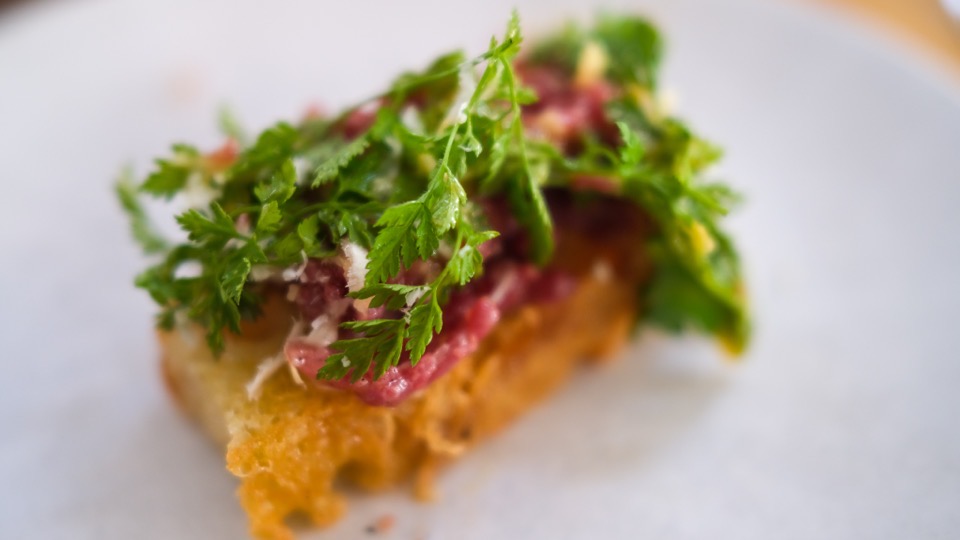
  • …a perfect casual food camera: Makes it so easy to take super close shots of plates of food. Which probably aren’t the best kinds of food photos but I’ve been taking them.
  • Loving the dials: I’m coming from the original X100 so it feels like coming home. Easy to switch to a fast shutter speed if I’m taking moving shots of Booster pouncing on a chew toy.
  • Video seems pretty good!: Again I’m a casual shooter. I’m not throwing it on a gimbal or putting an external mic on it. I don’t miss the a6400’s selfie screen configuration, but it’s crucial if you do talking head vlogs.
  • I still love the body: It feels a little bigger than the original X100 but it’s still such a nice, compact package. It feels better over the shoulder than the a6400 with a prime on it. I think I’ll be much more likely to take it out with me all day.

After one week with it, I only wish I got it sooner to capture the first few weeks when Booster was a tiny puppy and retroactively wish I got the X100F to capture my last few years in New York.

Okay some sample photos.

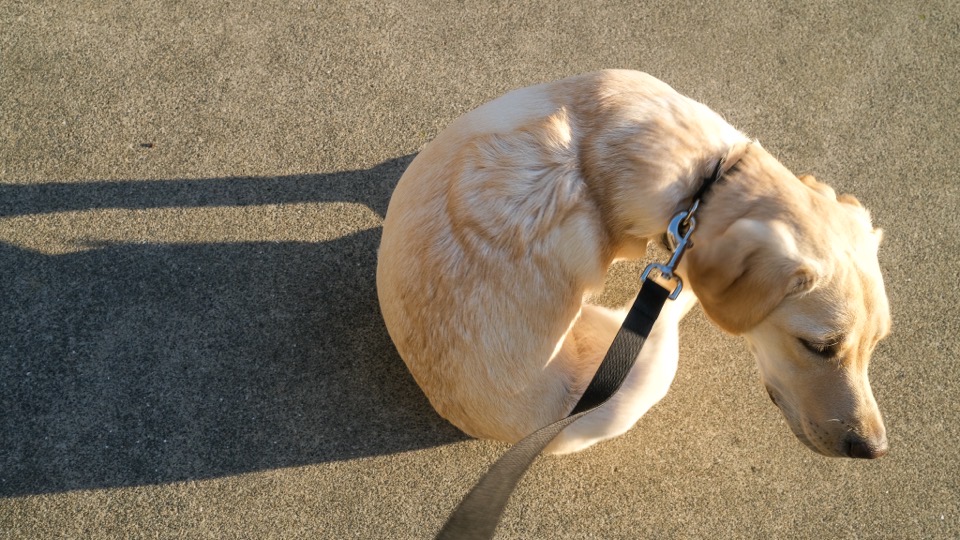
First, Booster retrieving my shoes.

DSCF0636

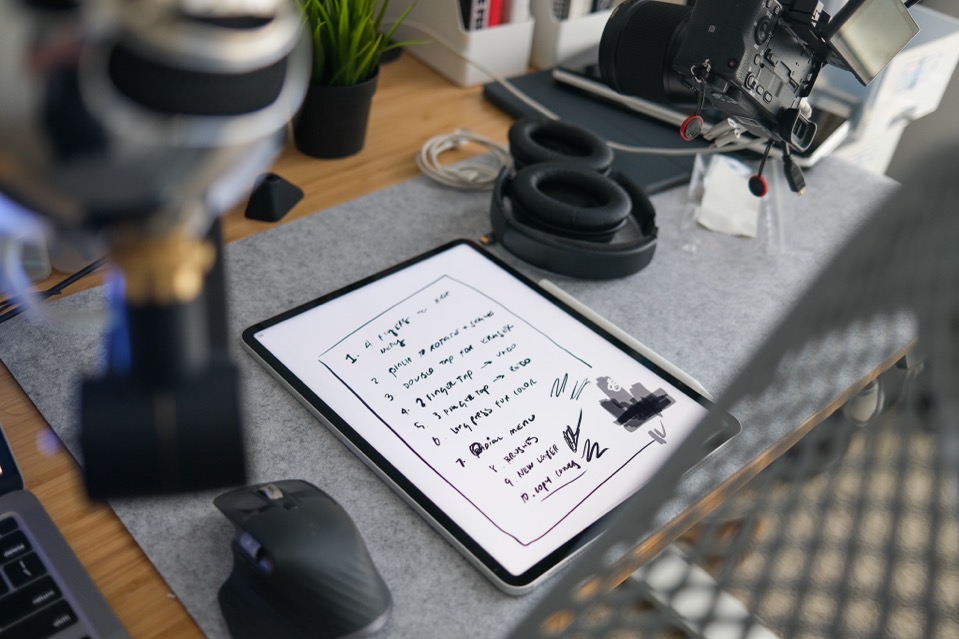
Trying to layer some random thing in the frame. (The iPad notes are supposed to be 10 quick tips to stay in flow in Procreate.)

DSCF0648

Okay like I said, I got this mostly to take photos of Booster, so here’s another (won’t be the last)

DSCF0633

Or even close to the last.

DSCF0627

Okay maybe I need to not just use f2.0 all the time…

DSCF0587

Perfect camera for moments at home.

DSCF0535

You’re too close man

DSCF0488 2

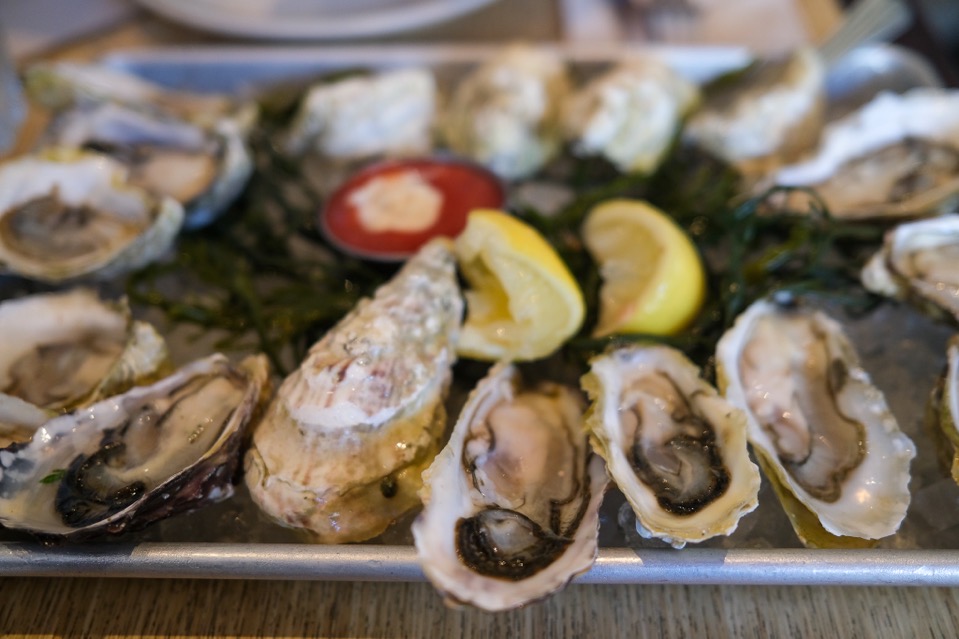
One of the top things about moving to SF is oyster happy hour availability

DSCF0412

Seems to have handled this nicely.

DSCF0319

  • Gear
Fujifilm X100V

A little daily reflection

June 20, 2021

Check out the full notes for “Off the Clock” by Laura Vanderkam

“You can also tend your garden by looking backward. At night, take a few moments to write a daily reflection in a journal. Answer a few questions:

  • What did I like most about today?
  • What would I like to have spent more time doing?
  • What would I like to have spent less time doing?
  • How can I make that happen?”

— “Off the Clock: Feel Less Busy While Getting More Done” by Laura Vanderkam


The thing I liked most about today was recognizing it wasn’t going well, knowing there was plenty of time left, and putting the effort in to turn the day around. It’ll be good to know that as long as there’s 1–2 hours to work with, it’s enough time for some mind work and body work.

What I would have liked to spend more time doing… I just wish I was more present in the middle of the day. I was so frustrated with myself from a wasted work session. I’d love to get to where that kind of thing would only mess up, say, the 10 minutes following it instead of the next few hours.

I would’ve liked to spend less time… wasting time with wasted movement. Setting a timer was a good idea. Not having something clear to make was a bad idea. I’ve written more on my phone sitting outside on a break from this hike than I did during that time block. There are a few different factors: I can multitask really well on a MacBook. Aka I can’t actually get anything done recently on my MacBook.

I start editing a video then open a podcast clip then start rendering something then remember I had something rendered from the day before that I need to publish so I open WordPress and then think I have a quick post I can write but I’ll start with a visual so I turn on my iPad but I want to capture the sawdust so I set my overhead camera up so I…

I started writing that paragraph as an exaggeration but then realized it was pretty much what happened earlier today.

I can have more finished sessions by writing in the editor (and maybe in the middle of a hike) This combo seems to be working. Take a hike, listen to some stuff on the way. Sit at the top and use my writing Shortcut:

  • Turn a 12 minute timer on
  • Turn a Spotify writing playlist
  • Turn on Dark Noise for coffeehouse sounds
  • Open Drafts

Then I grab a highlight and type up some thoughts. I need to steer it to have fewer examples of myself and more examples from other sources. But it’s a start.

If I just kept this practice going I could realistically do a post a day and get some cardio in all in an hour.

Not bad!

(Now just to actually do it…)

  • Book Notes
Laura VanderkamOff The Clock

How to save the day

June 20, 2021

Check out the full notes for “The Daily Stoic” by Ryan Holiday and Stephen Hanselman

“You know that feeling you get when you haven’t been to the gym in a few days? A bit doughy. Irritable. Claustrophobic. Uncertain. Others get a similar feeling when they’ve been on vacation for too long or right after they first retire. The mind and the body are there to be used—they begin to turn on themselves when not put to some productive end.”

— “The Daily Stoic: 366 Meditations on Wisdom, Perseverance, and the Art of Living” by Ryan Holiday & Stephen Hanselman


I woke up feeling very doughy.

As I talked about in my post from earlier today, I blocked 90 minutes to get something done and got very little done except a couple paragraphs talking about that.

Even worse, it’s a Sunday. It’s supposed to be a day of rest and leisure.

So I’ve been trying to save it and am feeling better about the day a few hours later.

  • Got brunch with my wife: There’s a Scandinavian cafe down the street so we got some cured fish, eggs a few different ways, and a couple lattes. Food isn’t the answer but it can be part of the answer.
  • Called my dad: Oh yeah and it’s Father’s Day. We both had half our gaze beyond FaceTime on the phone toward the Suns & Clippers. Still, a good convo. I’m grateful to have grown up in a home where basketball was on frequently.
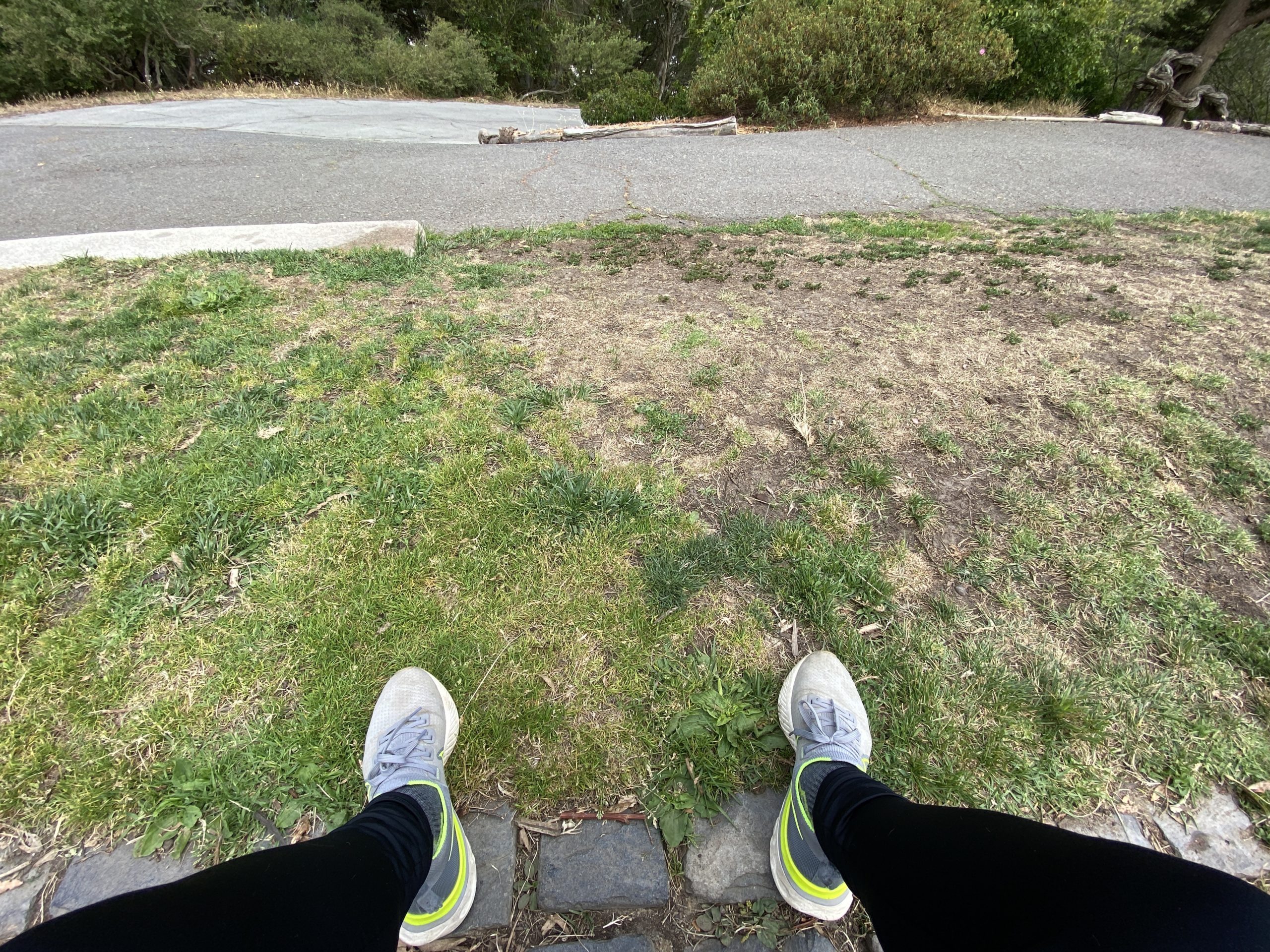
  • Went for a run: Okay a jog and speed walk and normal walk once I got uphill. Went up to the top of Buena Vista, which I used to do multiple times each week before getting Booster the puppy. Can’t wait until she’s big enough (and I’m good enough at walking her) to take her up here.
  • Listened to some Anthony de Mello: aka the other melo’ Anthony. Tim Ferriss mentioned the book again on a recent Q&A episode so I thought it’d be good to get a bit of a refresher.
  • Listened to some Daily Stoic: probably came to mind because I wrote some notes on a Daily Stoic podcast episode with Ryan Holiday and Malcolm Gladwell. Thought it’d be good to give the book a bit of a refresher as well.

I mentioned Buena Vista and actually am still up here typing this. It wouldn’t be the worst routine to come up here and write a post a couple times a week.

A little bit of mind work. A little bit of body work.

  • Book Notes
Buena VistaRyan HolidayThe Daily Stoic

Reduce wasted movement

June 20, 2021

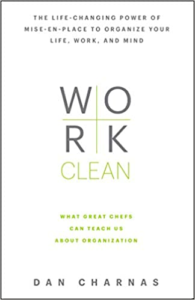
Check out the full notes for “Work Clean: The Life-changing Power of Mise-en-place to Organize Your Life, Work, and Mind” by Dan Charnas

I blocked off 90 minutes and all I got was this single book note post.

And a lot of wasted movement.

From “Work Clean”:

Chefs save motion to save time. Conserving motion conserves the time it takes to move. Conserving motion also conserves a tremendous amount of human energy, both physical and mental, as in refining a task by finding a better process or transforming motion into an automatic reaction so the mind can be free to think other things.

I’ve been adjusting my desk setup to record working sessions.

This mostly means I’ve been able to record hours of wasted movement. In my case, wasted movement is the combination of these things

  • Blocking time to work specifically on things I intend to publish
  • Not publishing those things

The time spent is wasted. The draft work is wasted.

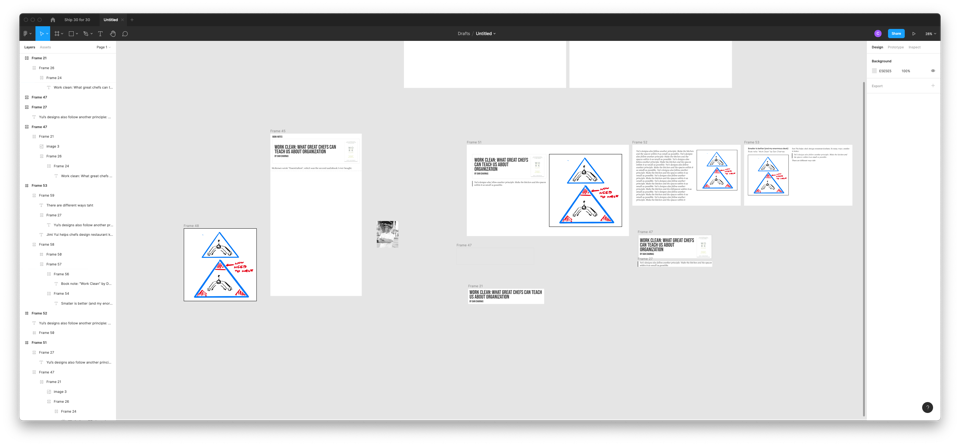
Here’s a screenshot of my wasted movement:

UntitledImage

Took notes on the iPad, sketched some stuff, decided it’d be good to try and make something in Figma for some reason, ran out of time, instead just wrote the post you’re seeing now.

Hopefully, being a little more conscious of that will help me reduce the wasted movement.

  • Book Notes
Dan CharnasWasted MovementWork Clean

Podcast Notes: Malcolm Gladwell on “The Daily Stoic”

June 19, 2021

  • Podcast
    The Daily Stoic
  • Episode Title
    Malcolm Gladwell on Running, Writing, and Storytelling
  • Episode links
    Apple Podcasts • Spotify • Daily Stoic

I started listening to this first thing in the morning during my first walk with Booster. Very first question: Ryan Holiday asks about when Gladwell writes.

I run in the afternoon, always have. Never in the morning.

Never, like not even when you’re traveling?

Never.

So you write first and then run?

Yes. Morning is thinking time. So it’s creative time. It seems crazy to put a run in the middle of the most cognitively valuable stretch of the day.

They also discuss working on their own ideas first thing in the morning before tainting it with other people’s most recent thoughts.

Maybe a good argument against my habit of waking up and throwing the Airpods on and picking whatever’s near the top of my podcast feed.

This inspired me a bit to go and draw some notes at a coffee shop. Feels good that the backpack load out is becoming a more frequent activity.

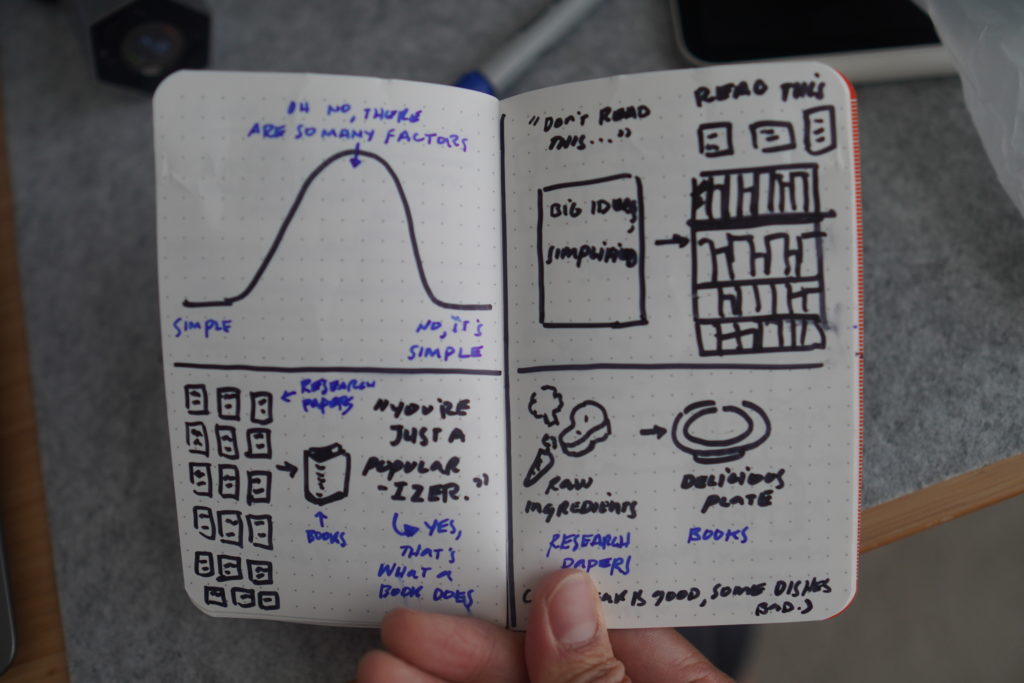
Podcast notes: Malcolm Gladwell's interview on Ryan Holiday's "The Daily Stoic"

Simple → a bunch of nuance → "oh wait, it's simple"

"You just popularize ideas" → Yes, that's the intent

Don't read Gladwell → Read 100s of research papers pic.twitter.com/h66xwDNMqt

— Francis (@activerecall) June 19, 2021

Anyway I’ll paste the rest of these notes below and then go for a run. I mean. Gotta get that BDNF.

From John J. Ratey, MD’s Spark:

Early on, researchers found that if they sprinkled BDNF onto neurons in a petri dish, the cells automatically sprouted new branches, producing the same structural growth required for learning—and causing me to think of BDNF as Miracle-Gro for the brain.

Oh yeah, the rest of the notes I sketched out:

“Don’t read Ryan. Don’t read Gladwell.” Instead just read a dozens original books written by actual Stoics or read 100s of original research papers that Gladwell uses. (Or, actually, read Ryan and Gladwell.)
Gladwell’s progression as a writer: writing in a loud news room at The Washington Post, writing a series of big-idea books, then starting a podcast and learning audio storytelling, and finally giving a full narrative nonfiction book a shot. (He mentions Michael Lewis as being the master of narrative nonfiction and eventually wanting to write his own.)
They discuss the effect where, if you’re an expert, you’ll notice an incorrect detail in an article and you can subsequently dismiss the rest of that article. But then you’ll move on and read the other articles taking things at face value, even though they might similarly have incorrect details. It sounds like Gladwell has sort of changed his thinking on this and knows it’s important to consider the audience. If it’s an intro to professional runners, he’s not the audience because he’s deep into running. It’s for a lay audience. A small incorrect detail is bad but the article as a whole can still serve as a good gateway.
They don’t talk about putting a meal together, but it came to mind for me. They discuss the criticism they often get: “You’re just a popularizer.” It’s supposed to be a bad thing. But, yes. That’s the intent of writing the books: to popularize good ideas. And so the meal idea for me is that you start with raw ingredients (books from stoics, research papers) and you can combine those and create a delicious plate of food (a single book, in their case). There are exceptions: a steak is a single ingredient that tastes great. Plenty of non-delicious plates of food. Just as there are great, approachable ancient books and entertaining research papers, there are also many many bad books.
  • Podcast Notes
  • « Go to Previous Page
  • Page 1
  • Interim pages omitted …
  • Page 37
  • Page 38
  • Page 39
  • Page 40
  • Page 41
  • Interim pages omitted …
  • Page 106
  • Go to Next Page »

Primary Sidebar

Subscribe to the channel

Focusing on making videos in 2023.

✍️ Recent Posts

Keep the page turned

An idea for what I might try to make next: How do people transform?

Carve out time away from (crappy) flow

Switching it up: CrossFit and the welders of Rogue Fitness

Musashi: the age we live in (or something)

🎧 Recent Episodes

Takeaways: “Someday is Today” by Matthew Dicks | #126

125: Creativity x Fitness – Consistency, Classics, and Crane Kicks (3 links)

118: The Psychology of Fitness: 1, 2, 3

Popular Posts

  • Book Notes – “Awareness: The Perils and Opportunities of Reality” by Anthony de Mello
  • Lightning Round Questions
  • Kobe Bryant: Every day math
  • Journal: The first 8 weeks of Active Recall
  • How to succeed as a writer (What I’ve learned by reading Bill Simmons)

By Francis Cortez

  • About
  • YouTube Channel
  • Instagram (@activerecall)
  • Twitter (@activerecall)

Categories

  • iPad Pro
  • Podcast
  • Book Notes
  • Podcast Notes
  • Weblog
  • Videos
  • Fitness
  • Creative Pages
  • iPad
Back to homepage • By Francis Cortez (@activerecall)