• Skip to main content
  • Skip to primary sidebar

Active Recall!

Podcasts, videos, and iPad art

  • About
  • All Posts
  • Podcast
  • Videos
  • Book Notes

Cal Newport: The overhead stacks up (so focus on one thing at a time)

March 20, 2024

Cal Newport talks about overhead tax in “Slow Productivity”:

Further, imagine it takes seven hours of core effort to complete a single report, and each report that you’ve committed to write generates one hour per day of overhead tax (emails, meetings, occupied mental space, and so on) until it’s completed.[*] In this thought experiment, if you commit to just one report at a time, giving it your full mental attention until it’s done before you agree to start working on another, you’ll complete reports at the rate of one per day (assuming you work eight hours per day). If, on the other hand, you agree to take on four different reports simultaneously, the combined overhead tax of maintaining all four on your task list will eat up half your day in logistical wrangling, effectively doubling the time required to complete a single report. In this example, doing fewer things ends up producing more results.

When you have too much work in progress, there’s too much overhead tax. It’s not just filling in the existing gaps in your day to day. It starts to create the default framing for your day, then you’re trying slice your actual projects into the gaps remaining.

In the old rocks in a jar analogy, overhead tax is the sand that fills the jar in the first place. You don’t even have to put the big rock in first to get its overhead tax sand.

You can fill an entire day with overhead tax. It’s one type of fuel for procrastination.

You can prevent it from stacking so much by parking projects in a backlog. Though, just stretching the parking lot analogy, there are different ways to park.

If you really can’t put it on hold, it’s like double parking someone with your hazards on to run into a building. It’s still going to generate some overhead tax and take some mental energy on the backburner.

To truly remove the overhead tax, you’ve got to find the equivalent of an unmetered unreserved un-everything’d parking spot. At a team level, this could be a team backlog where a project actually might not be assigned to you at all. So you can focus strictly on what you’re assigned to and others trust and follow the team’s system. They can see what’s on your plate and you’re allowed to focus on it.

I’m now thinking of eating at a buffet while double parking someone so I know there are too many metaphors here.

Time to run.
  • Book Notes
Slow Productivity

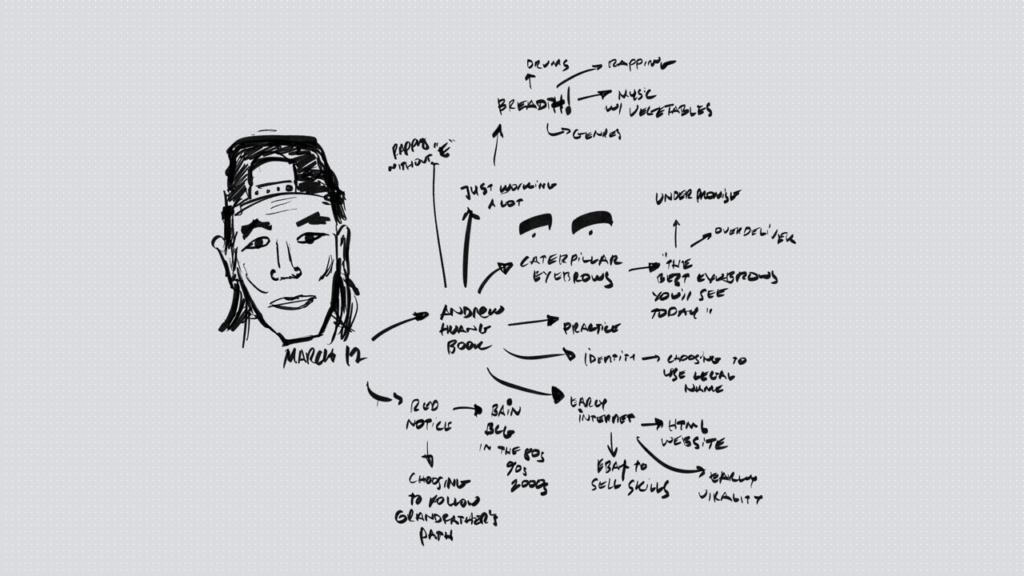
Andrew Huang: Make a lot of stuff

March 12, 2024

From “Make Your Own Rules: Stories and Hard-Earned Advice From a Creator in the Digital Age”

The thing that really made me better was just that I worked. A lot. There was no substitute for time spent on my craft. I should’ve known this from my experience with piano lessons, and from seeing the regimens of the virtuosos at York, but I had never felt that level of drive for mastering a particular instrument. I had the mistaken understanding that practice was mainly about physical training—getting your fingers or your voice to respond with nimbleness and accuracy. The truth is that it’s just as much about your mind. I eventually realized that writing and production were my deepest musical passions, but also that they could be practiced. Of course they can: after writing your hundredth song you’ll be a better writer than you were when you wrote your tenth.

I loved Ali Abdaal’s “Feel-Good Productivity” but wish it had more about his journey on YouTube. I love Rick Rubin’s “The Creative Act” but it had stories about specific artists he’s worked with. Luckily, each of them has a podcast where they share more of those sorts of things.

Andrew Huang’s book has similar themes and he does talk about his journey making stuff online. I grew up on the internet in a similar time, so of course I’m really enjoying the stories about late 1990s/early 2000s internet. Putting a site together with HTML and FTPing things to servers.

He has a deep deep understanding of music. I made awful rap songs with my friends in high school. We would hop to whatever the best free audio host was at the time (SoundClick sticks out in my mind) and join forum tournaments to try to win some prize: usually a drum machine or something like that.

My friend won a smaller tournament and won a GameCube, then the tournament hosts said it got lost in the mail or something like that. I don’t remember exactly other than the fact that he won but never got the GameCube.

Okay anyway. I’m loving the book so far. One chapter motivated me to make… something tonight.

Create every day, judgment free. Make it a point to set time each day (it could be fifteen minutes, it could be all evening, whatever is feasible to you) to buckle down and create. Do just the creating—no editing, no polishing. That means no revisiting yesterday’s work to try to make it better—or at least not during this judgment-free window. Let brand-new ideas happen without worrying about them being complete, perfect, or even good.

And this post is it.

  • Book Notes
Andrew HuangMake Your Own Rules

Robert Greene: remember that you used to have stress

March 9, 2024

From “The Laws of Human Nature” by Robert Greene:

Most of us remember a golden time of play and excitement. As we get older, it becomes even more golden in our memory. Of course, we conveniently forget the anxieties, insecurities, and hurts that plagued us in childhood and more than likely consumed more of our mental space than the fleeting pleasures we remember.

Journaling is great for remembering that it wasn’t perfect. These days I do try to skew toward positive things happen when I’m journaling. But it’s not as highlight reel-y as a social media feed.

Sometimes I’ll flip back through old notebooks. (Usually when I’m supposed to be decluttering or something.) It’s not so much that I see either flawlessly happy periods or any dark nights of the soul.

Instead, and I’ve heard this isn’t uncommon so I don’t kick myself too much for this anymore, I see that I’m worried about a lot of the same things I still worry about today. How I’ll finally lose 10 pounds. I’ll finally focus on a side project. Maybe this time.

Or I’ll see some work thing that doesn’t matter at all years later. It’s at least a good reminder that any single specific work thing today won’t matter in the long run.

Some things really turn golden over time that weren’t golden at all in the first place. When I moved to New York, for 5 weeks I hopped from Airbnb to Airbnb to Airbnb to Craigslist sublet to finally a formal sublet. This wasn’t squalor, but it was one of the most stressful periods in my life.

Now all I remember is the excitement.

  • Weblog
Laws of Human NatureRobert Greene

Daigo Umehara: Daily routine

March 6, 2024

Daigo has one of the most interesting daily routines so I made this video about it and also just talked about other lessons from his book “The Will to Keep Winning”.

The routine reminds me of The Cultural Tutor interview with Ali Abdaal where he talks about his own start-of-his-day routine, which sounds like it starts in the late afternoon or early evening:

Cultural Tutor: “So I get dressed and then the first thing I do is I’ve got to get outside and not do anything in particular. Just to get a coffee. I’ll drink a coffee at home and then just go outside and see what’s happening. Just walk around for a bit, like 5 p.m. and see what the weather’s like and let my brain slowly emerge.”

Different ways to win.

  • Videos
Cultural TutorDaigo

Seth Godin: Flow is a symptom

March 6, 2024

From “The Practice”

If we condition ourselves to work without flow, it’s more likely to arrive. It all comes back to trusting our self to create the change we seek. We don’t agree to do that after flow arrives. We do the work, whether we feel like it or not, and then, without warning, flow can arise. Flow is a symptom of the work we’re doing, not the cause of it. 

Without looking, I’m sure that I’ve written about this highlight on the blog before.

Right now I’m trying to work without flow and at the very beginning of what I hope will be a common practice.

  • Set a timer for 10 minutes
  • Grab a book highlight
  • Write for the rest of the time

I don’t know that it’s going to lead to great writing, but I need to practice publishing more. And I’m sort of okay blogging into an empty void at the moment. My thinking is that it makes some ideas a little more real than just throwing it in a notes app. In Tiago Forte’s terms, it’s a better “intermediate packet”. From “Building a Second Brain”:

That system is your Second Brain, and the small pieces of work-in-process it contains I call “Intermediate Packets.” Intermediate Packets are the concrete, individual building blocks that make up your work. For example, a set of notes from a team meeting, a list of relevant research findings, a brainstorm with collaborators, a slide deck analyzing the market, or a list of action items from a conference call.

I’ve been writing in various notes apps and text editors daily for… it seems like forever. It’s mostly private. I started aiming to write 1000 words this year after hearing Nathan Barry talk with Ali Abdaal about how life-changing 1000 words a day can be. Now I’m trying to shift that more toward 1000 words a day published.

The first idea: write a 1000-word post every day. No matter what, that seemed sort of difficult to make interesting. I hadn’t even started and I was already overhtinking: what kind of format, should it be a link roundup, should it be around a single topic, etc.

I didn’t pursue that idea and just sort of forgot about writing publicly.

Today while talking in the car (to the Otter app, which has become a bit of a habit), I realized I could break the 1000 words up into multiple posts daily. Take one highlight from something and then write about it. If a connection comes up, it probably means there’s another post that I can write about.

I don’t need flow to write one of these posts. But sometimes in the middle of writing a few posts, it arrives.

  • Book Notes
Seth GodinThe Practice

Cal Newport: Why he loves watching movies

March 6, 2024

From Cal Newport’s interview on the Rich Roll podcast (YouTube)

I wrote about that in the book that learning a lot about movies helped my writing.

Because if you study what makes movies great, that process is not intimidating because I’m not a director. So it’s just interesting. And oh, this is great. Look at these directors and they have this vision and you’re just being exposed to raw creative impulse.

I found that was helping me in my writing. I was getting inspired by what people were doing in this other art form. And then that was giving me ideas about taking risks in my writing.

Whereas if I was just directly studying writing, it’s harder because now it’s uncanny valley. You’re studying people who are kind of doing what you’re doing, but a little differently. All the stresses of your job as a writer kind of getting involved in it. So I found studying an unrelated creative art completely from a hobby perspective, re-energize the art I do for a living.

I’ve done something similar in the past few years in studying an unrelated creative art. I make my living in UX design, but consuming UX-related content outside of work starts to create an opening for the stress of work to leak through.

Instead, I lean toward game design content. It seems to be the right balance for me. A lot of creative principles are there and applicable to UX design. Sort of. At least to the abstraction of “Hey here’s the creative process we used to build software”. The connection between God of War level design and enterprise UI is sometimes thin, I admit.

Then I can learn from creatives and instead of thinking about work, I tend to think about games I grew up playing.

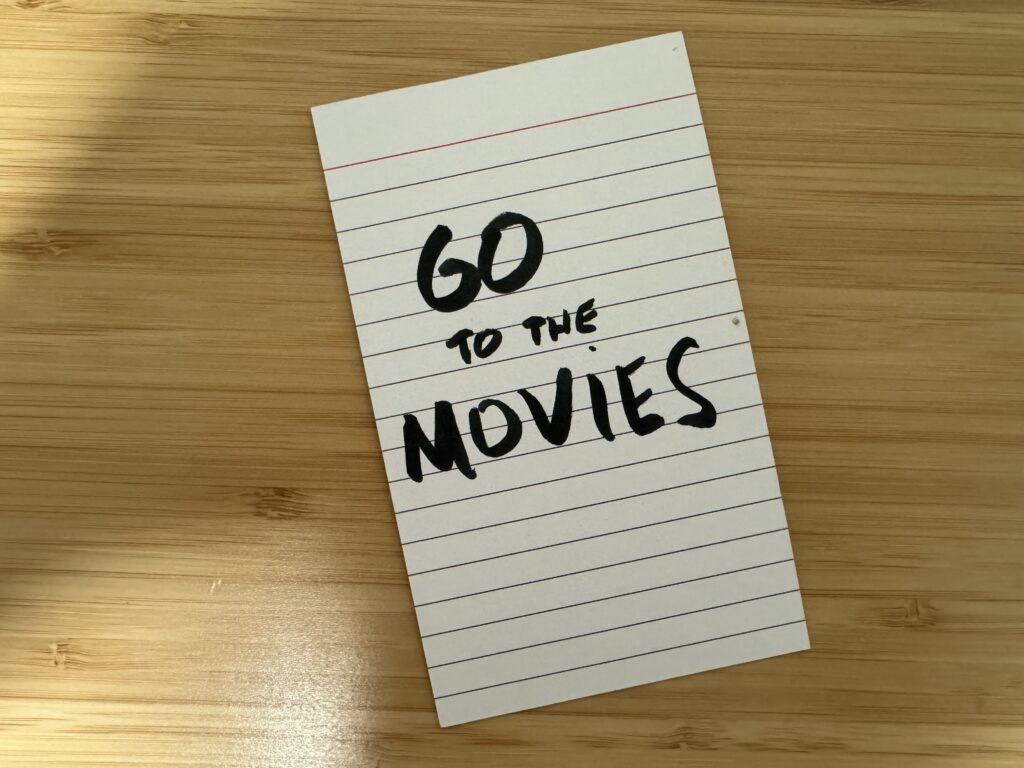
I’m also trying to just start watching more movies. Going to the theater has the modern bonus of being a place where you deliberately won’t use your phone for a few hours. (Unless you’re a monster.)

For my second viewing of “Dune: Part Two”, I did a solo trek to an SF Metreon 70mm IMAX showing. I did the same for Part One a few days after watching it on HBO with friends on a TV and then reading post after post on Reddit about how you have to see it in theaters.

BTW, Cal Newport’s book “Slow Productivity: The Lost Art of Accomplishment Without Burnout” is out. Great so far and I’ll be sure to write some notes here.

  • Podcast Notes
Cal NewportMoviesSlow Productivity
  • « Go to Previous Page
  • Page 1
  • Page 2
  • Page 3
  • Page 4
  • Page 5
  • Page 6
  • Interim pages omitted …
  • Page 106
  • Go to Next Page »

Primary Sidebar

Subscribe to the channel

Focusing on making videos in 2023.

✍️ Recent Posts

Keep the page turned

An idea for what I might try to make next: How do people transform?

Carve out time away from (crappy) flow

Switching it up: CrossFit and the welders of Rogue Fitness

Musashi: the age we live in (or something)

🎧 Recent Episodes

Takeaways: “Someday is Today” by Matthew Dicks | #126

125: Creativity x Fitness – Consistency, Classics, and Crane Kicks (3 links)

118: The Psychology of Fitness: 1, 2, 3

Popular Posts

  • Book Notes – “Awareness: The Perils and Opportunities of Reality” by Anthony de Mello
  • Lightning Round Questions
  • Kobe Bryant: Every day math
  • Journal: The first 8 weeks of Active Recall
  • How to succeed as a writer (What I’ve learned by reading Bill Simmons)

By Francis Cortez

  • About
  • YouTube Channel
  • Instagram (@activerecall)
  • Twitter (@activerecall)

Categories

  • iPad Pro
  • Podcast
  • Book Notes
  • Podcast Notes
  • Weblog
  • Videos
  • Fitness
  • Creative Pages
  • iPad
Back to homepage • By Francis Cortez (@activerecall)